How I work · An initiative with no senior owner

Own the design inside the team, not beside it

Put a senior designer on an initiative that has none, inside the team rather than beside it, from the first sketch until it ships or is handed over.

When this is the job
An initiative that matters, is funded, and is moving sideways because nobody senior owns the design of it
How long it takes
The life of the initiative, with what done means written down at the start and the handover begun in the first month
What it asks of the team
A product owner who owns what done means, a seat in the standups and the repository from the first week, and engineers who take design in pull requests
What it leaves behind
The initiative shipped or handed over, the decisions documented, and patterns the team can extend

The situation

There is an initiative that matters, and it needs someone senior to own the design of it end to end. Until someone does, it moves sideways: funded, staffed with engineers, and waiting on decisions nobody is placed to make. The owner it needs sits inside the team, in its standups and its repository, not beside it in a review meeting.

Where it has worked

Two accounts. One is a senior owner inside the team for eight months; the other is what learning the job first did to the design. The figures are the case studies’ own.

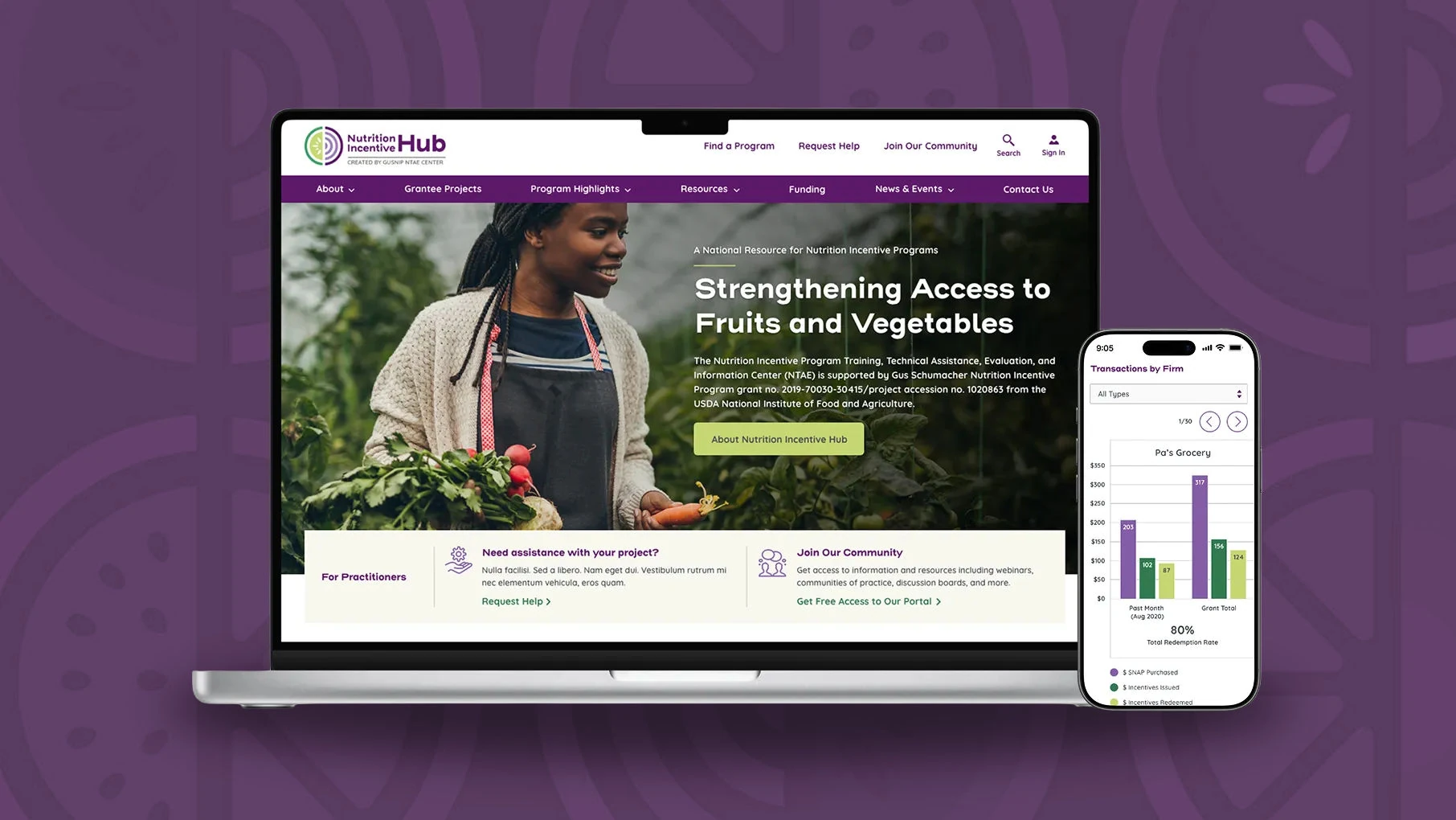
Nutrition Incentive Hub · USDA-backed, eight months

Grantees spent more time chasing paperwork than running their programs.

The network ran on old software, spreadsheets and workarounds, and no two of them agreed. For eight months I was the lead product designer inside that effort, from the interviews through the information architecture to one portal and reporting platform that replaced all of it, with a documented design system built in from the start. The component library went to the developers ready to use, so the clarity outlasted the launch.

  • ~10 hrsto process a data request, down from 45 to 55 hrs
  • ~2×the grantees served, without adding analysts

That is the shape of it at full length: one senior owner inside the team from the interviews to the platform, leaving behind something the team could extend without me.

On a dispatch floor at Midwest Couriers the same rule came first: I sat with the dispatchers and learned the job before redesigning the tool, and the map I had assumed was the answer went out when watching them work proved it wrong.

The dispatch account, with the screens →
How it goes, step by step

Four steps, each with something to show for it. The example under each one is drawn from the same example company, so the four add up to one story: a healthcare provider whose scheduling initiative was funded six months ago and has moved sideways since, because nobody senior owns the design of it.

  1. Agree the initiative and what done means

    One initiative, with a written definition of finished. Embedded work that starts without this becomes general capacity, and general capacity is how a defined stretch turns into an open-ended one.

    e.g.Done, on one page. The scheduler replaces the phone tree for three clinics, and nothing else.

    Adam and the sponsor across a small table, his pen on one line of a single sheet, one box drawn on the whiteboard behind them.
  2. Join the rhythm you already have

    Your standups, your tools, your review cadence. No parallel process beside your team, and no handover meeting between me and the people building it.

    e.g.No meeting invented for my benefit. Their standups, their board, their release train.

    A laptop showing a six-tile video standup, one teammate mid-sentence, Adam in the bottom-right tile with a coffee.
  3. Own the design work end to end

    Research through to the built thing, including the unglamorous middle: the states, the edge cases, the pull-request comments. Ownership means the parts nobody volunteers for.

    e.g.The states nobody volunteers for. The double-booked slot, the clinic that closes early, the patient who cancels twice.

    A tablet on a stand showing the clinic scheduler: a full week of appointment blocks with one overlap marked in sage, a column of patient cards, and a printed list of edge cases with checkboxes beside it.
  4. Leave it maintainable

    Documented decisions, patterns your team can extend, and a deliberate handover. The measure of the work is what the team can do in the three months after the initiative ships.

    e.g.Two of their designers can extend it without calling me. The handover started in the first month, not the last week.

    Two of the team's designers at their monitors, one pointing at a component and explaining it to the other, with Adam on a laptop video call at the end of the desk.

What it asks of the team

  • A product owner who owns what done means and can say no to what is not it
  • A seat in your standups, your tools, and your repository, from the first week
  • Engineers who will take design in pull requests and conversations, not handoffs
  • A named person to hand over to, agreed at the start rather than found at the end

When it is one of the other three

Questions people ask

How long does it take?
The life of the initiative. What done means is written down at the start, so the stretch has a shape, and the handover starts in the first month rather than the last week.
Is this something you do alone?
No. I sit in the team’s standups, work in its repository, and take design into pull requests and conversations rather than handoffs. Engineering is in the room from the first sketch, and the people who do the job today are in it before the first sketch.
What does the team need to give?
A product owner who owns what done means and can say no to what is not it, a seat in the standups, tools and repository from the first week, engineers who will take design in pull requests and conversations rather than handoffs, and a named person to hand over to, agreed at the start.
What does the team leave with?
The initiative shipped or handed over, the decisions documented, and patterns the team can extend.
Where has it worked?
Eight months inside the USDA-backed Nutrition Incentive Hub, from the interviews to one portal and reporting platform, and on a dispatch floor where learning the job first turned the design over. Both case studies carry the figures.
Is this a role or an engagement?
A role, first. I am looking for a senior product design role where this is the work, in-house and remote, with a team that can hire in Minnesota. I also take select independent engagements, where the same job runs for a defined stretch with an end date agreed at the start.

On a team

The person in the standups is the person doing the design, from the research through the states nobody volunteers for to the pull-request comments. What done means is written down at the start, and the handover starts in the first month, not the last week, because the measure of the work is what the team can do without me.

If this is the job

I’m looking for a senior product design role where this is the work: in-house, hands-on, remote, with a team that can hire in Minnesota. A few sentences about the initiative and where it has stalled are enough to start. I also take select independent engagements.

Start a conversation

or write to adam@adamhickey.com